

Bankole Thompson's Landmark Catholic Address Calls America to Recover the Moral Power of Hope
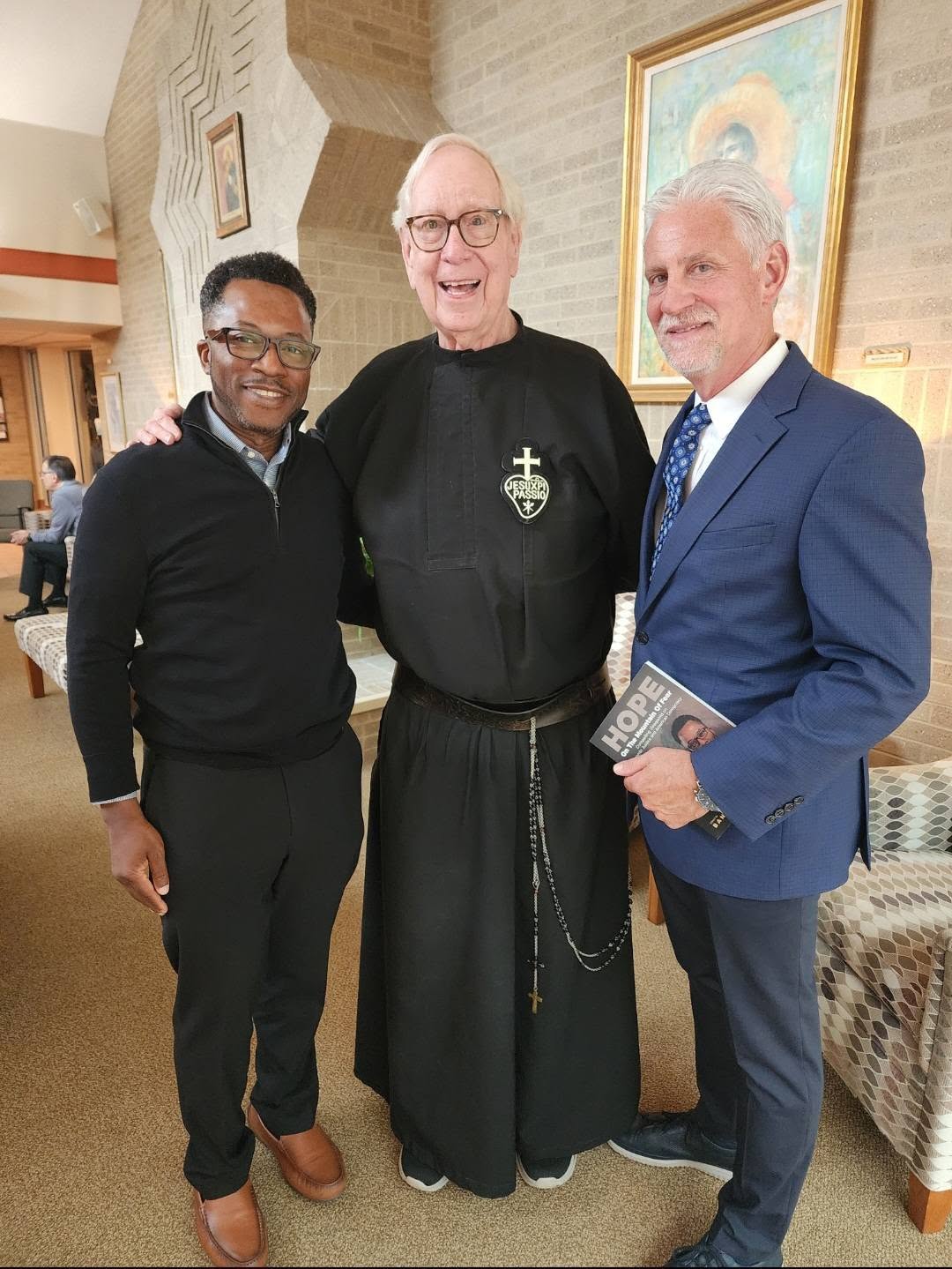
Acclaimed journalist Bankole Thompson, Father Patrick Brennan, spiritual director of St. Paul Retreat Center and Catholic business leader John Bodary
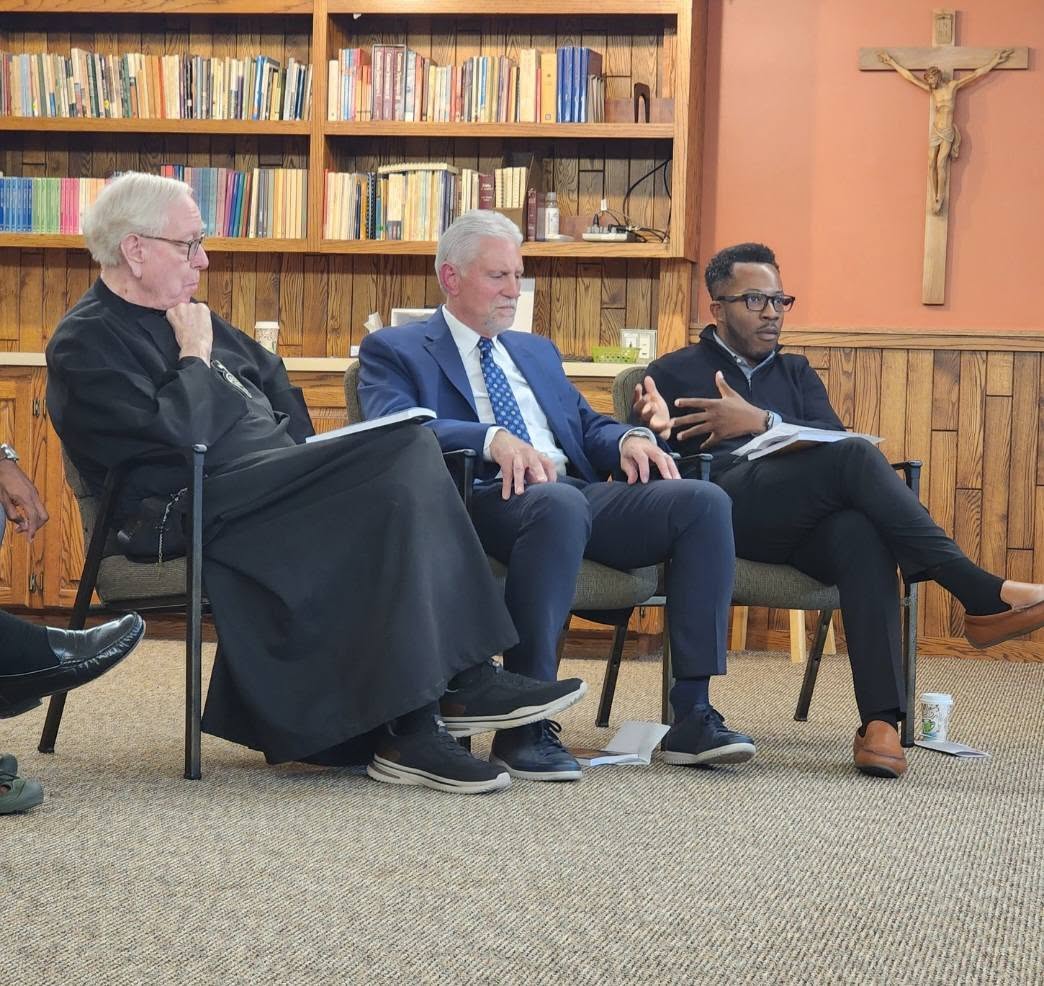
Nationally acclaimed journalist Bankole Thompson speaking on Wednesday, June 24 at St. Paul Retreat Center in Detroit
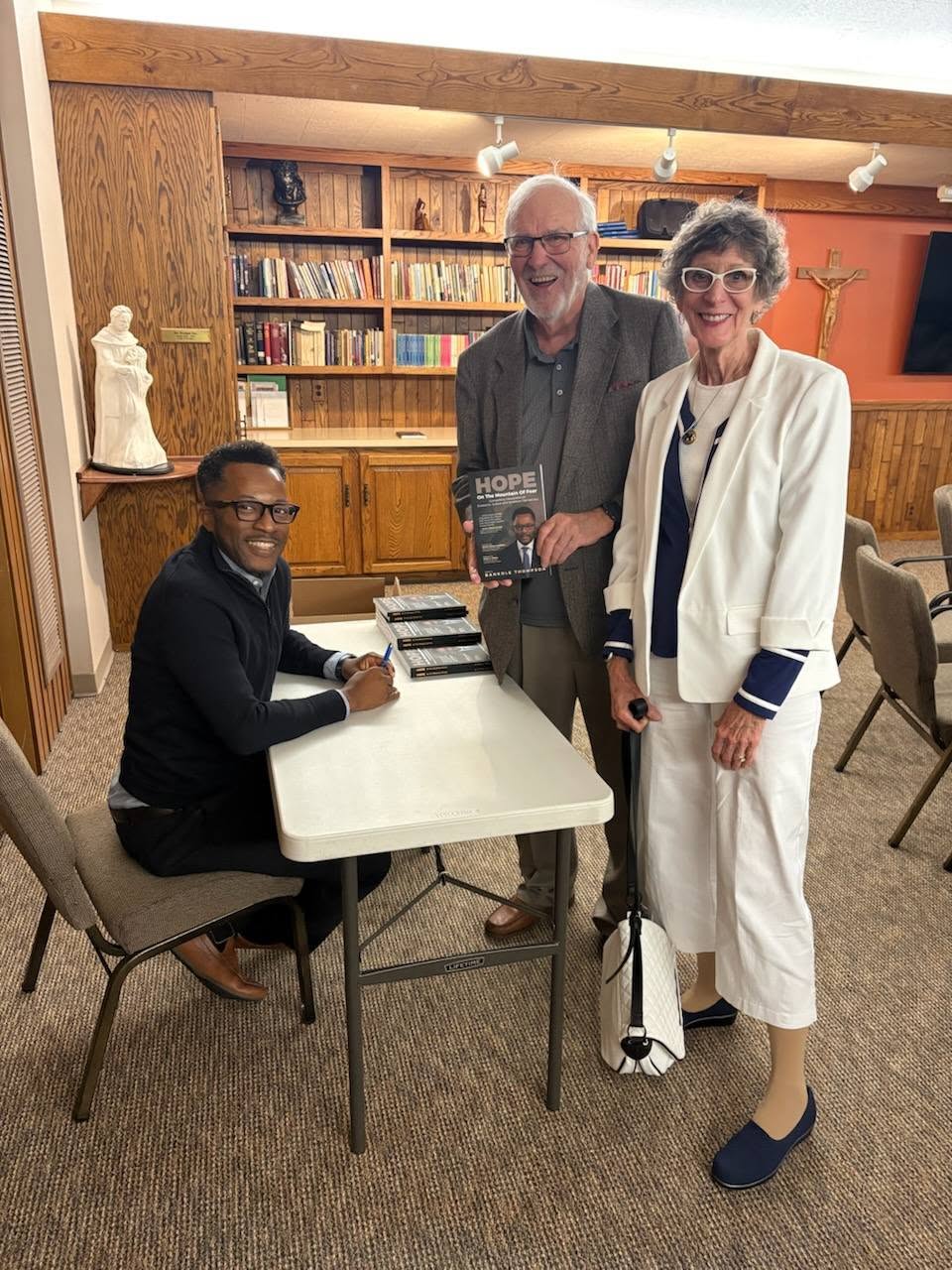
Members of the Catholic community stayed after the address to receive autographed copies of Bankole Thompson's book.
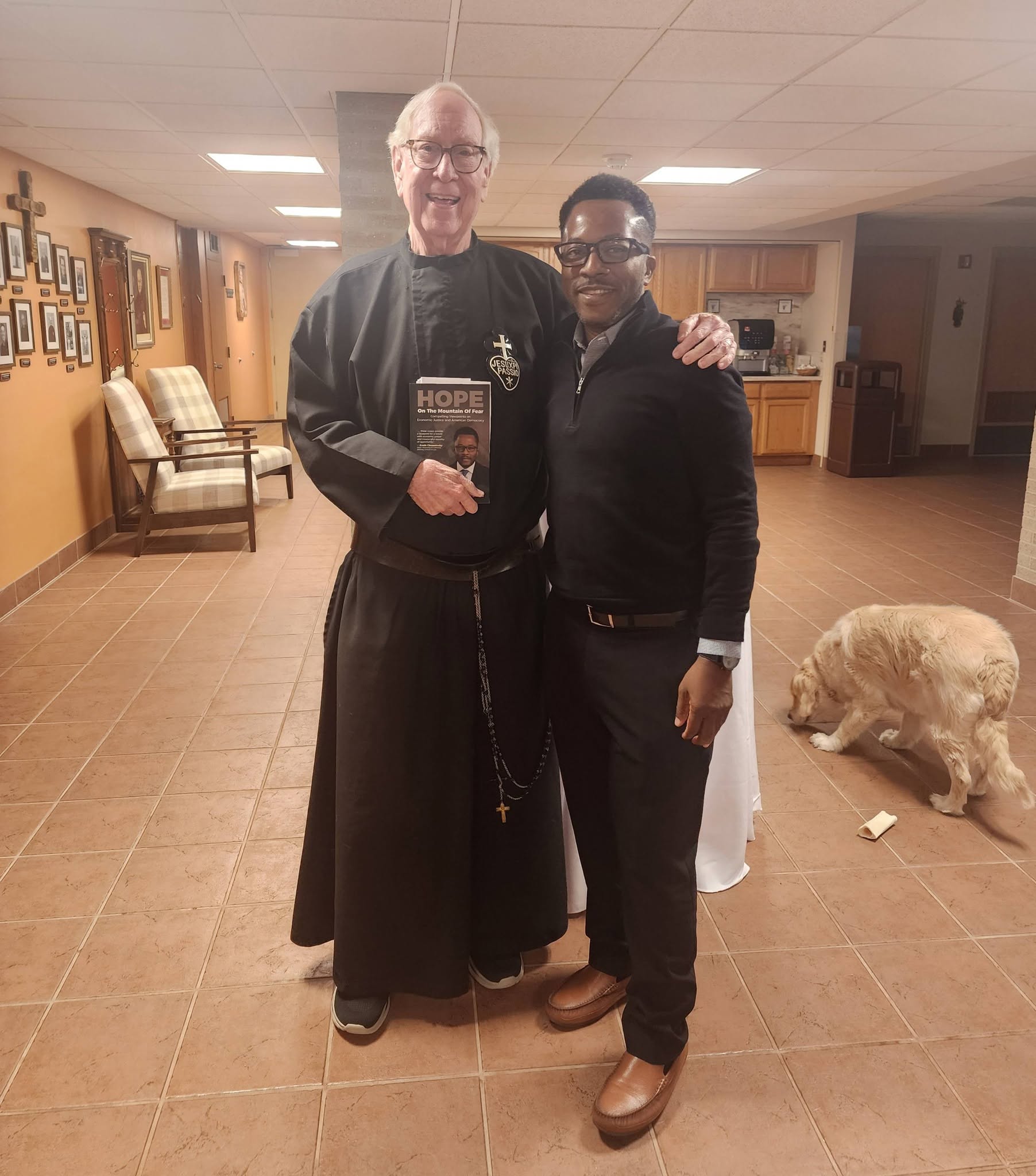
Father Patrick Brennan, spiritual director of St. Paul of the Cross Retreat Center with nationally acclaimed journalist Bankole Thompson.
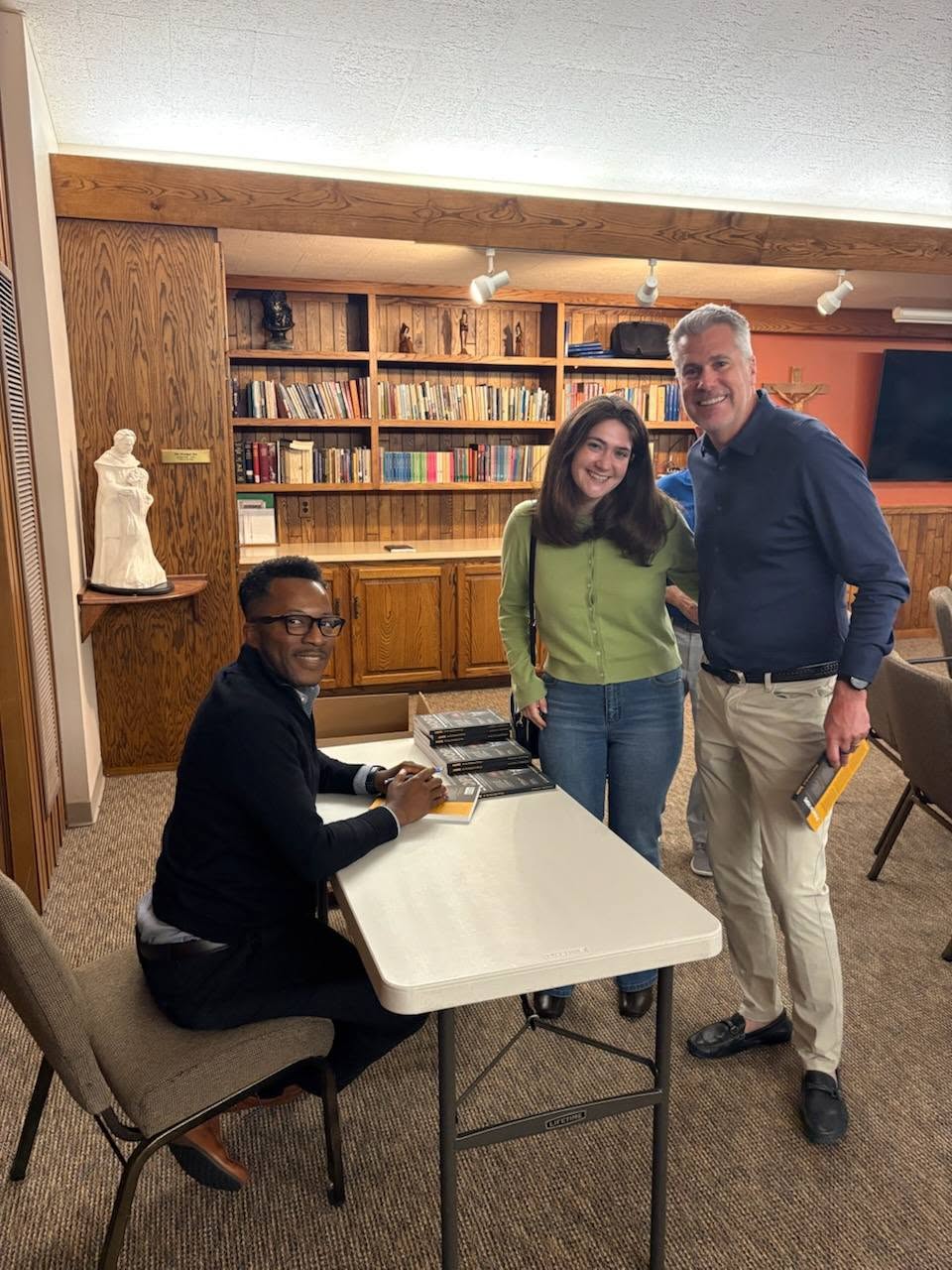
Kate and her father attended the dinner and book conversation that featured nationally acclaimed journalist Bankole Thompson.
Nationally acclaimed journalist and public intellectual challenges faith leaders to help shape the moral future of democracy, race and economic justice
DETROIT, MI, UNITED STATES, June 29, 2026 /EINPresswire.com/ -- In an evening that transcended a traditional author event and became a searching examination of America's moral future, nationally acclaimed Detroit journalist, author, and standard-bearer for economic justice Bankole Thompson delivered his first address before a Catholic institution, offering a compelling call for faith communities to help renew the ethical foundations of American democracy.Hosted by St. Paul Retreat Center in Detroit, the dinner and book conversation held on Wednesday, June 24, centered on Thompson's latest sixth book, HOPE: On The Mountain Of Fear, but evolved into a broader dialogue about the defining challenges confronting modern society: democratic fragility, widening economic inequality, racial division, technological disruption, and the search for hope in an era increasingly marked by fear.
The address, titled "Pilgrims of Hope in an Age of Fear: Faith, Economic Justice, and the Future of the Human Family," marked an important milestone in Thompson's public life. For more than two decades, he has earned national recognition as one of America's respected interpreters of democracy, race, economic justice, and public leadership. His invitation to speak before a Catholic audience reflected the growing resonance of his work beyond journalism and civic affairs into the broader moral and intellectual life of the nation.
"This was not simply a book conversation," Thompson said. "It was an invitation to ask whether our society still possesses the moral imagination necessary to preserve human dignity in an age of unprecedented change."
The significance of the event extended well beyond Detroit.
At a time when public discourse is often dominated by political conflict and ideological polarization, St. Paul Retreat Center chose to convene a conversation grounded not in partisan debate, but in moral reflection. By inviting Thompson, the retreat center affirmed the historic role of religious institutions as places where enduring questions about justice, conscience, and the common good can be explored with intellectual seriousness and spiritual depth.
In his remarks, Thompson argued that America has misidentified its greatest challenge.
"The greatest crisis facing our society is not political. It is not economic. It is not technological," he said. "It is spiritual. It is a crisis of hope."
That thesis became the organizing principle of a powerful address that drew upon history, Catholic social teaching, democratic thought, and the philosophy of nonviolence to examine what Thompson described as the "moral architecture" required for free societies to flourish.
Throughout the evening, Thompson praised the moral witness of the late Pope Francis and reflected on the early leadership of Pope Leo, connecting their emphasis on human dignity, solidarity, and the common good to the challenges posed by artificial intelligence, economic inequality, and democratic instability.
He argued that the defining questions of the twenty-first century cannot be answered by technology or markets alone.
"They are moral questions," Thompson said. "And moral questions require moral leadership."
A longtime champion for economic justice through his public lectures, community forums, interviews, his twice-a-week Detroit News opinion columns, his podcast, Bankole's Nation, and the anti-poverty think tank, The PuLSE Institute, inspired by his work, Thompson, challenged the audience to view poverty, opportunity, and work not merely as economic issues but as reflections of a society's moral priorities.
He echoed one of the central insights of Catholic social teaching: that economies exist to serve people, not people to serve economies.
Throughout his address, Thompson situated contemporary challenges within a historical tradition stretching from St. Augustine and St. Thomas More to Abraham Lincoln, the Rev. Dr. Martin Luther King Jr., Pope John Paul II, Nelson Mandela, his late mentor, the Rev. Dr. Bernard LaFayette Jr., arguing that every generation inherits "its own mountain of fear" and must decide whether fear or hope will shape its future.
"Hope," Thompson declared, "is not the absence of fear. Hope is the decision that fear will not have the final word."
The audience responded with sustained engagement, remaining after the program to continue the conversation, request copies of Thompson's remarks, and receive autographed editions of HOPE: On The Mountain Of Fear. Many described the address as intellectually challenging, spiritually meaningful, and deeply relevant to the moral questions confronting both the Church and the nation.
Thompson expressed deep appreciation to Father Patrick Brennan, spiritual director of St. Paul Retreat Center, for what he described as the foresight to host "a conversation where faith and public life could meet in service of truth rather than division." He also thanked Catholic business leader John Bodary, the president of Woods Construction, whose sponsorship helped make the evening possible.
As the United States continues to wrestle with questions of democratic resilience, racial justice, economic opportunity, and technological change, Thompson's address underscored the enduring importance of institutions willing to convene serious conversations about the nation's moral direction.
More than a speech, the evening reflected the emergence of Thompson as a messenger of hope whose work increasingly bridges journalism, public scholarship, and moral leadership. His voice has become one that not only interprets the forces shaping democracy, race, and economic justice, but also challenges Americans to recover the ethical commitments upon which a just society ultimately depends.
"The future of the human family," Thompson said, "will not ultimately be determined by wealth, technology, political power, or military might. It will be determined by whether we preserve our commitment to human dignity, pursue justice, and sustain hope."
In an age defined by uncertainty, the gathering at St. Paul Retreat Center offered a reminder that some of the nation's most consequential conversations are still taking place where faith, intellect, and conscience meet.
BANKOLE THOMPSON
The PuLSE Institute
+1 313-800-0143
email us here
Legal Disclaimer:
EIN Presswire provides this news content "as is" without warranty of any kind. We do not accept any responsibility or liability for the accuracy, content, images, videos, licenses, completeness, legality, or reliability of the information contained in this article. If you have any complaints or copyright issues related to this article, kindly contact the author above.
